







GAA

Share
Published 12:57 11 Dec 2017 GMT
Explore more on these topics:
On average, teams score roughly two times more when attacking man-on-man as opposed to into a “blanket defence”.Even if you lose possession on the long ball, however, you’re probably at in and around a neutral point of expectancy for getting the next score. By sending the ball the other side of their middle third, you’ve essentially created the same circumstances as though they’ve played a slow kick-out to the full back line – and all figures show that this makes them more likely to concede the next score on the turnover than on their own possession.
 There is some slightly complicated maths which render a seemingly mathematically logical option of simply kicking the ball away, over the top of the middle third, in this position, as incorrect (though not as crazy it may seem).
However, when you calculate the chance of scoring off the initial long ball, assuming you have close to a fifty/fifty chance of winning it to begin with, it becomes a statistical/tactical “no-brainer”.
There is some slightly complicated maths which render a seemingly mathematically logical option of simply kicking the ball away, over the top of the middle third, in this position, as incorrect (though not as crazy it may seem).
However, when you calculate the chance of scoring off the initial long ball, assuming you have close to a fifty/fifty chance of winning it to begin with, it becomes a statistical/tactical “no-brainer”.
The long ball option, as opposed to trying to weave through the middle third and risking the turnover and counter-attack for the opposition, results in a significantly higher chance of getting the next score.Not convinced? There are some more complex mathematical equations which can prove this in more in-depth terms, but without going into these and what a poker player calls “implied odds”, let’s put some straight forward figures on this. Basically, as our kick-out statistics illustrate, most sides are more likely to concede on the first turnover on a short kick-out if it allows the opposition to set up with eleven or more men behind the ball. The long ball over the top basically replicates this situation if you lose the long ball. So, a worst case scenario sees you put your side in a neutral position, at its worst (against most sides). Add on the 50 percent chance of winning the long ball divided by no less than a fifty percent chance of gaining a score if you do, and you’ve just given your side a 25 percent plus possibility of scoring off the long ball. This 25 percent is basically a pure statistical edge in the expectancy of the next score (minus a small percentage accounted for with more complex maths relating to odds of a score on the opposition’s potential second, third possession etc, which brings it to around a 16-19 percent edge). If it sounds like a re-invention of the wheel, it’s not. It was working off the same statistical premise that Dave Basset’s Wimbledon, Graham Taylor’s Watford and Aston Villa and Jack Charlton’s Ireland made leaps and bounds with in soccer in the 80’s and 90’s.
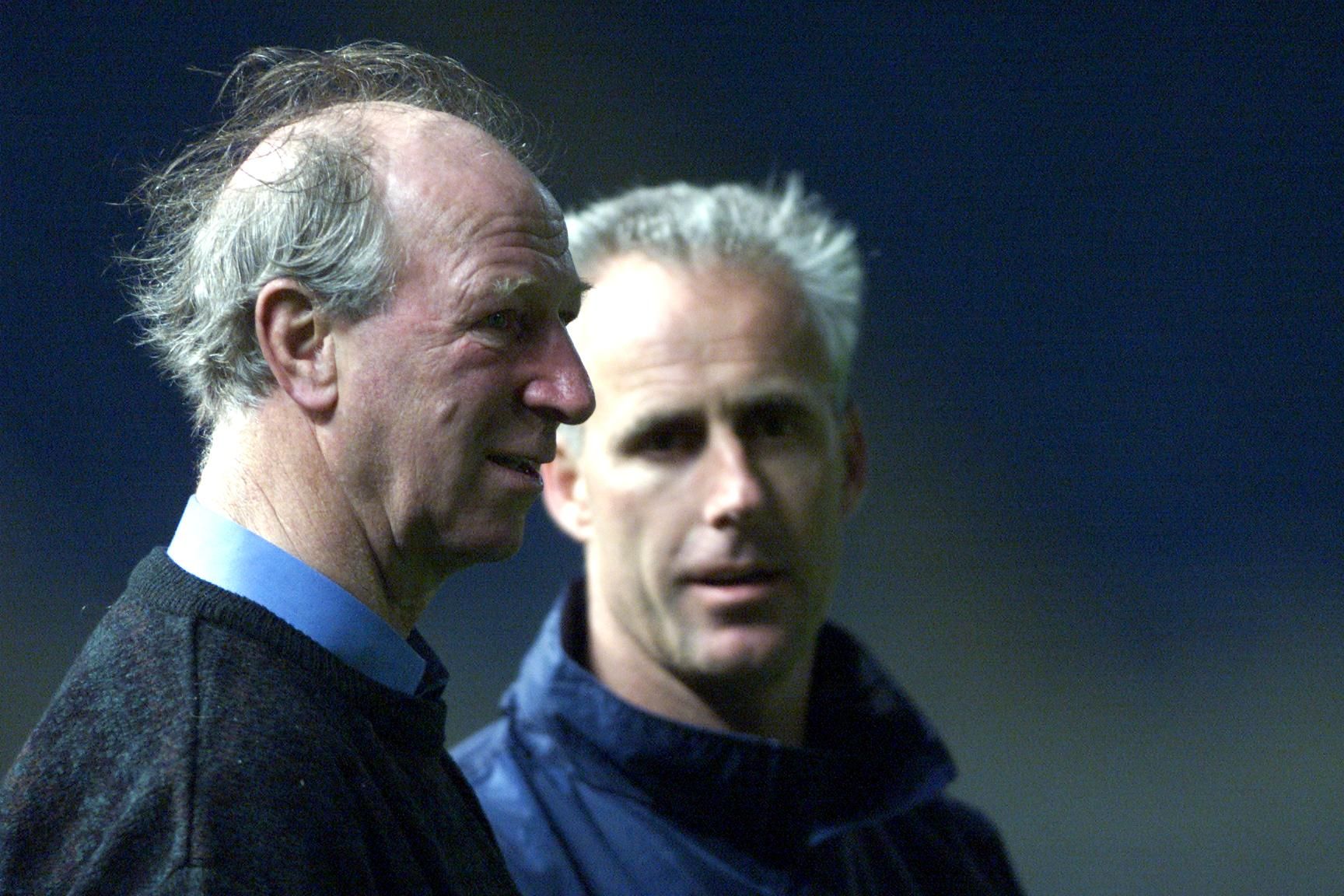 The early days of soccer stats illustrated that over half of goal concessions came off the back of losing possession on the middle third.
Conclusion? Kick it over that middle third and you eliminate that risk. It wasn’t pretty, but it sure was effective.
While soccer culture bemoans the long ball, ironically, the same strategy holds a place in the hearts and minds of large sections of the GAA fraternity.
Used at the wrong time, it’s Gaelic football suicide. Used at the right time, it can give huge statistical edges.
Just ask Carlow. Though the principal was generally put into practice on kick-outs, not so much open play, by condensing their own half and kicking kick-outs over the top of eleven/twelve of their own players, they essentially implemented this principal throughout 2017.
To the bemusement of many analysts, they jumped to 25th on the GAA adapted ELO system while applying this principal in 2017 with an increase of 17 percentage points – the highest made by any county in 2017.
It’s a statistical and tactical edge that’s crying out for others to take advantage of.
Stephen O'Meara supported the Galway hurling performance analysis team in 2017 and is the creator of GaaProStats, statistical and video analysis software designed specifically for Gaelic football and hurling.
The early days of soccer stats illustrated that over half of goal concessions came off the back of losing possession on the middle third.
Conclusion? Kick it over that middle third and you eliminate that risk. It wasn’t pretty, but it sure was effective.
While soccer culture bemoans the long ball, ironically, the same strategy holds a place in the hearts and minds of large sections of the GAA fraternity.
Used at the wrong time, it’s Gaelic football suicide. Used at the right time, it can give huge statistical edges.
Just ask Carlow. Though the principal was generally put into practice on kick-outs, not so much open play, by condensing their own half and kicking kick-outs over the top of eleven/twelve of their own players, they essentially implemented this principal throughout 2017.
To the bemusement of many analysts, they jumped to 25th on the GAA adapted ELO system while applying this principal in 2017 with an increase of 17 percentage points – the highest made by any county in 2017.
It’s a statistical and tactical edge that’s crying out for others to take advantage of.
Stephen O'Meara supported the Galway hurling performance analysis team in 2017 and is the creator of GaaProStats, statistical and video analysis software designed specifically for Gaelic football and hurling. 
GAA

GAA

GAA
GAA
Kerry GAA boss calls out AFL clubs over ‘sneaky’ gift to players
He is not happy! The president of the GAA, Jarlath Burns, is set for big talks with AFL representatives before the end of the month, in their continued attempts to curb the flow of players to Australia. There are currently 14 Irish players contracted to AFL clubs, with these including some of the most talented […]
GAA
22h
Galway give timeline for new manager as Jim Gavin out of running
They will be making a decision soon! Jim Gavin appears to be out of the running for the Galway manager job, following the departure of Pádraic Joyce. A six-time All-Ireland winning boss with Dublin, Gavin was seen as a strong contender and had held talks with Galway GAA officials. But despite this, and the fact […]
GAA
2 days ago
An in-depth ‘Football Manager’ game is coming to the GAA this year
GAA