





gaa
Share
GAA confirm massive experimental rule changes coming to hurling
Published 12:20 9 Sept 2026 BST
Updated 12:20 9 Sept 2026 BST
Homegaa
Get our Pub Quizzes and latest news straight to you by clicking here »People will be divided!
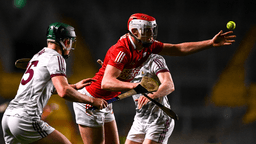
The new experimental hurling rules will be applied in third-level Division 1 games this year.
The main change is the new hand pass rule, which forbids players to make two or more hand passes.
This comes after much skepticism over the hand pass and whether players throw the ball more often than not.
The steps rule has been increased, with players allowed to carry for six steps rather than four.
Given that the rule is rarely enforced, and players often go beyond four steps, the reasoning behind it is questionable.
65s and puck-outs have also changed, with 65s to be taken from the opposite 65m line, which makes for an increase of 10m.
In terms of puck-outs, the defending team cannot touch the sliotar until it has gone beyond the 45m line, while both sides must have three players between the 45m and 21m lines.
There are also major changes to the rules around throw-ins.
They will take place between one player from each side. A second player from either team can stand on at the touchline on the half-way, with all other players behind their respective 45m lines.
All other throw-ins will be contested between two players, with the rest keeping a distance of 13m.
For all throw-ins, the initial competition for the sliotar must take place on the ground.
Big changes will also be introduced to the area of goalscoring opportunities being denied, with harsher penalties.
Colliding with a player after the ball has been played, and taking players out of the play or restricting the movement of players with deliberate jersey pulls, will result in a yellow or red card, as opposed to a black card.
A new advantage rule will allow a team the chance to take a free-kick during a five second window after the foul.
If the team with the advantage commit a foul during that period, the advantage will continue for them, and the referee will deal with the infringement after.
There will also be a return for the maor foirne, who will be permitted to enter the field during breaks in play.
Linesmen will also act as assistant referees.